glorious flowers

glorious flowers

Tuesday, January 8, 2013

an abundance of seeds

I have been buying seeds like a maniac lately and now have far too many to be able to plant all of them this year. I admit I did get sucked in to the 2012 doomsday hype a little, and felt I should be at least somewhat prepared for a societal collapse or other disaster. I have also been searching hard for Ojibwe heirloom crops for work and for the community I live in, for my husband's tribe. I have been thinking quite a bit about seed saving, and preserving crops for war-torn countries like Iraq, Afghanistan, and Syria, as well as traditional indigenous crops that are becoming rare. For some reason the word "rare" seems to be a cue for me to click on "add to cart." I guess that's not a bad thing. I will take care of the seeds, propagate them, and distribute them to other seed savers, so they are certainly in good hands. Inexperienced hands with good intentions, anyway. Actually, I have been advised by more experienced seed savers to buy what I can of the rare seeds because they will not always be available. I joined Seed Savers Exchange, which comes with the added benefit of access to the Seed Savers Yearbook, an enormous catalog of seed savers across the world (but mostly in the USA) offering thousands of rare varieties. Unfortunately I haven't been able to use my 10% membership discount with Seed Savers Exchange much because I have found that I'm more interested in the seeds offered by Baker Creek Heirloom Seeds, and I have purchased the majority of my seeds from them. I have also found some gems sold by Turtle Tree Biodynamic Seeds, Trade Winds Fruit, Southern Exposure Seed Exchange, Native Seeds/SEARCH, the  Museum of the Fur Trade, and Renee's Garden. I feel like the $35 membership fee is worth it just for the access to the Seed Savers Yearbook, though. In browsing the yearbook I'm drawn to anything with Ohio in the name (Ohio Pole Beans, Ohio Cutshort Beans, Ohio Calico Corn, Ohio Pink Tomato, Ohio Blue Clarage Corn...) probably because I'm homesick. I am also drawn to purple or blue vegetables, pretty dry beans, varieties from the northern Native American tribes, endangered varieties, and novelties. It can get expensive fast, though, especially for "unlisted" members who don't have any seeds listed for sale. For example, one packet of corn, with around 50 seeds, costs $5 for unlisted members.
Since I have encountered a dearth of Ojibwe heirloom varieties, I have been seeking out seeds of the crops grown by their neighbors, like the Mandans, Arikaras, Hidatsas, Lakotas, Menominees, Oneidas, and Ho'Chunk, and their relatives the Potawatomis, Odawas, Lenape (Delaware), and Algonquians. Also, since climate change research suggests that Minnesota summers are becoming hotter and dryer, I want to trial some dry farming techniques from the southwestern tribes. The Hopi techniques are particularly unusual to me. They entail very deep planting of many corn seeds in one 12-inch hole. I want to plant the seeds of plants who have grown this way successfully, so I want to use Hopi corn for this experiment. I think I already expressed my excitement for the success I had with Hidatsa Red beans in the 2012 growing season. They are amazingly drought tolerant, prolific, and low-maintenance, and they matured faster than any other beans I grew. I'm hoping the beans from the Hidatsas' allies, the Arikaras and Mandans, are just as rugged.
I started saving seeds last year but I meant to save a lot more. I learned quite a bit about seed saving, though, so I certainly feel more prepared. I bought corn condoms so I can grow several varieties and hand pollinate them. I will also be twistie tying Curcurbit blossoms to hand pollinate those. I can't wait...

Thursday, November 29, 2012

and here comes the tundra

The hard freeze came to my neighborhood a few hours after I got home from the Biodynamic Farming and Gardening Association's Sacred Agriculture conference and visiting friends and fam for Thanksgiving. The temperatures dipped down around 0F. That was disappointing because I didn't get a chance to harvest everything I could have, plant the rest of my tulips and camassia, or mow the future bee forage area. At least there is snow to insulate all the new perennial additions to our homestead from the harsh Minnesota winter.

At work I became an official University of Minnesota Master Gardener. State Master Gardener director Julie Weisenhorn drove up to Fond du Lac Reservation to give my cohorts and me our name tags, certificates, calendars, and some huge, beautiful, red velvet cupcakes! We completed our training earlier this year and then racked up 50 or more volunteer hours each by planting culturally significant plants with clients and staff at an addiction treatment center, assembling plant identification cards for Ojibwe ethnobotanicals, and creating a 4H garden and holding junior master gardener classes at a local community center. I've been wanting to become a master gardener for a long time, but haven't really lived in any place long enough to take the classes and volunteer and all that until now.

So now that it's cold outside I'm focusing on the indoor garden. I have amassed some pretty cool plants this year with my extra income, like a Vanilla orchid, coffee, figs, several Cattleya orchids, and a tea tree. I've had a bit of trouble with the tea tree because of an assumption I should not have made. I figured tea trees prefer dry conditions because they are from Australia. But they actually live in swampy areas in Australia, which I learned a few days ago after I came home from my vacation to find my little guy's leaves all shriveled and dry. He was even infested with mites, which is rare for tea trees because the oils they produce are fairly strong and repellent to most insects/arthropods. My tea tree must have been under quite a bit of stress. I feel bad but now I know how to take care of him a little better and hopefully he will grow back soon. To make use of my mistake, I trimmed off all of the branches with dead leaves and I'm currently infusing some grapeseed oil with them. I rinsed the mites off, but if any were remaining the grapeseed oil would have smothered them. And I'll strain them out later, before I use the infused oil to make salve.  Mites are hard to get rid of, and with a large plant collection where many plants are touching or close, they can spread fast. You can physically remove the mites or at least keep their numbers low by spraying regularly with lukewarm water (spray them in the shower once a month or so--and turn the leaves over to get those creepers hiding out on the bottom). You can also cut off the affected plant parts, kill the mites with neem oil, or smother them with horticultural oil.
My biggest insect problem in the house at the moment, and probably since we moved in, is with fungus gnats. They are small flies, about the same size as vinegar flies (AKA fruit flies, the ones that hang around your dirty dishes, recyclables, or compost) but less robust and darker. They don't do much harm, they are just annoying. Their maggots live in soil and consume dead and decaying matter, including plant roots. They persist in large numbers around our house, alighting on the television at night and swarming the windows in the morning. They are attracted to yellow things, just like other common greenhouse pests like whiteflies and aphids. So you can make a simple trap by spreading something sticky on a yellow piece of paper and hanging it or staking it near your plants. I use Tanglefoot, which is an inexpensive natural product made of gum resins and vegetable wax. It is messy to apply because you want to cover as much as you can on both sides (or tape it to a window) and it is quite sticky. I spread it with a compostable knife so I could just toss it in the compost afterward. Another option for controlling fungus gnats, which I haven't tried yet, would be to make a Bt (Bacillus thurengiensis) soil drench. Bt is a bacterium that is ingested by immature insects that kills them. There are three different strains, and each one is specific to a different order of insects. Bt israelensis kills flies and is the active ingredient in some mosquito dunks. Bt kurstaki kills caterpillars, and Bt popilliae kills beetles.
I read on the Perelandra website (www.perelandra-ltd.com) about the cycles of energy that occur with the changing of the seasons. Machaelle has a special relationship with her garden and she says that she marks the exact moments of the equinoxes and solstices with a simple ritual like lighting a candle. She says the garden cycle starts in the fall, when the plan for the next growing season forms, and it solidifies at the winter solstice. The plan is put into action at the spring equinox, and it comes to fruition at the summer solstice. After reading that (well, what she wrote is much more poignant), I decided to start acknowledging the passing of the seasons by being present and awake. This year that means waking up at 5:00am on what could be a very important solstice.  I will also hold off on developing any sort of plan for the garden and homestead until after the winter solstice when the devas who care for the plants will have their own plan, which I hope they will share with me.

Wednesday, October 31, 2012

Siberian squill

A few weeks ago I had this intense introduction to Siberian squill, a very hardy, early spring flower. I had been reading the book, "Attracting Native Pollinators," which recommends planting Siberian squill for native bees foraging in early spring. Its vibrant blue flowers are a great source of pollen, and observers will see bees carrying the blue pollen from the flowers in their pollen baskets and scobae. Siberian squill is extremely hardy and can survive in zone 2 (-50F)! I found Siberian squill on sale online so I promptly purchased 200 bulbs for my yard. Then I googled Siberian squill to learn more about it. I found an entry on www.minnesotawildflowers.info that calls Siberian squill invasive and advises readers to eradicate it! The website claims Siberian squill spreads rapidly and crowds out native wildflowers, and is therefore undesirable. Other folks say it forms a beautiful blue, ephemeral carpet of flowers over decades, that it is a welcome sight after a long winter, and that all traces of Siberian squill are gone by the end of May.
So I decided to go ahead and plant the Siberian squill I ordered this afternoon. I certainly don't want to propagate problematic plants, but to me the potential benefits of planting Siberian squill far outweigh the risks. Just in case, though, I decided to plant the bulbs in the gravelly, sandy, nutrient-poor fill dirt surrounding our house. That way its vigorous tendencies will be curbed a bit. I am definitely looking forward to seeing those pretty blue flowers popping up in the frozen Minnesota March and watching all the visitors who will come to visit them!

Thursday, September 13, 2012

catharsis

The garden is so beautiful as the gladiolas and cosmos continue to bloom and the gorgeous sunflowers come into their full glory. Many of the squash plants succumbed to powdery mildew but even in their decay they look pretty in contrast with the green hues of their neighbors. I didn't do anything to combat the powdery mildew because it is usually not a serious problem. I have heard, though, that milk can help to curb the spread of powdery mildew. Baking soda is also commonly recommended for powdery mildew control. Despite the proximity of the infected squash vines to the ageratum plants I am growing for varietal research for the University of Minnesota (they are the purple flowers on the right center of the second picture), the ageratum has not been infected at all. This is good news for the proprietors of Aloha Blue, Blue Mink, Pink Mink, Blue Planet, and Fields Blue ageratum.

Six watermelons live in the garden, and three are as large as basketballs! Those three are a heritage variety called Moon and Stars. I am so impressed with the beauty and size of these watermelons that I would like to continue growing them indefinitely. That is, as long as they taste good! I haven't tasted them yet because I want to pick them at the perfect time. There are three indicators of watermelon ripeness that I know of. One is that the blossom end (the end furthest from the stem) blushes yellow. Another is that the curly tendril on the vine near the stem will turn brown. Also, when tapped, the watermelon makes a hollow sound like a drum. So far the Moon and Stars watermelons meet only one of these criteria (the hollow sound). The top photo was taken about a month ago and this watermelon has grown even bigger since then (I'm not exaggerating when I say it's as big as a basketball).


I put my rain barrel in a rather inconvenient place, next to a clump of stinging nettles. I was trying to move it when I noticed a couple of insects hanging out on the nettles. If you are not familiar with stinging nettles (Urtica dioica), it is a plant in the mint family that will make your skin burn anywhere it touches you. Stinging nettles are one of the biodynamic compost preparations. They are high in iron and will increase the iron content of your compost if you add them to the pile (wear thick gloves!). The biodynamic preparation is made by burying nettles in the ground for several months. As I tried to move the full rain barrel to move the spigot away from the nettles I noticed a tough, spiky, goth-looking caterpillar chomping away on the leaves. I was impressed with what a bad ass this guy was, and then I saw a grasshopper chomping away on a neighboring stinging nettle plant. I reluctantly conceded that my sworn adversary is also quite the bad ass. This grasshopper and I "had a moment together" and I decided to stop killing its kind. Humans can eat stinging nettles too, but we need to cook them first. This apparently takes away the sting.


I have heard from some of the elders on the reservation that our yard was once occupied by a car mechanic. He made a really nice garage with an oil change pit basement and a drive-through stall, but he also used to store cars in the back yard on their sides. One elder used to have tomato fights with a friend as a boy, using tomatoes from a neighbor's yard and shielding himself behind the upturned cars. I wouldn't be surprised if some of those cars are now buried under the garden. Every time it rains, I find more glass in the soil. I also find random pieces of rusty metal from time to time. I'm not especially worried about this since I am using biodynamics to help heal the soil, and I know that the soil will always have enough iron in it!
I started making lip balm this week using some of the herbs from the garden. There are a few upcoming events where I will have an opportunity to sell my wares. I have been wanting to make a cold sore-fighting lip balm for years now and I finally learned how to make lip balm a couple of months ago. It's actually pretty easy. I used olive oil and beeswax as a base and added antiviral superstars ginger, licorice, goldenseal, and lemon balm. Fortunately I don't need to test its efficacy, but now I have a new line of defense and I'm excited for that. I'm also excited to share it with others who may find it helpful. Other products I will have for sale include catmint cat toys, reusable cloth maxipads, herb bunches, several varieties of winter squash, flower bouquets, and chocolate mint lip balm. I would like to find a product that works and sells well, and narrow my focus a bit to increase the quality and quantity of what I produce. Currently I'm in the trial and error stage, but fortunately I still have a job outside the home.


Saturday, July 28, 2012

best raspberries growing out of cement

A walk around the garage yesterday revealed an exciting crop of wild (?) raspberries growing on the north side of the garage (with 4-ft tall stinging nettles!) and through a crack in the cement in front of the older side stall. There are other wild raspberries growing under a stand of mature pine trees, plus some more that grew out of a wood and trash pile back where I planted some bare root raspberry plants that haven't fruited. Those others have small fruits, though, and these ones growing by the garage have big, juicy, luscious fruits on them. I put a question mark on wild up on that first sentence because of the size of these raspberries. Whatever they are, they're impressively persistent. They have been sending up shoots inside the garage as well.

I'm working on pulling up more grass in the garden today, harvesting my peas finally, and putting in a fall crop of carrots, spinach, kale, and romanesco broccoli. I still haven't gotten around to mycoremediating the soil in front of the house with the oyster mushroom spawn. I guess I should get on it soon or I'll have to wait until next year. I harvested a reishi mushroom from my Fungi Perfecti indoor mushroom kit. More are growing.
I want to cultivate those outside too. I need to do more research on that first.

Wednesday, July 25, 2012

how my garden grows

It rained today for the first time in over a week, and like most areas of the United States, northern Minnesota has been rather hot as of late. Still, miraculously, the majority of the plants in my garden show no signs of water stress. I credit this to evening shade and tough love. I have found that most plants adapt to a lack of supplemental water, and that if watered too often, plants will begin to depend on it and wilt if the watering isn't kept up. Our high temperatures have remained in the double digits, so that has certainly helped as well. There were some casualties, though. Some of the peas died, and the rosemary I overwintered from last year and recently replanted in the garden is looking pretty bad, and a couple of the hardy kiwis (including the only male) have lost all their leaves to drought. Perhaps the rain falling now will bring the kiwis back (they seem to be rather tough--the ones I planted at work have survived trampling and neglect) and the rosemary.
I harvested two sunflower seed heads yesterday after working on staving off the invading grass. I saw some bees crawling all over the yellow wood sorrel (Oxalis stricta) flowers so I decided to let them remain in the garden. The peas are finally starting to form. The plants are growing so tall and erect, full of pretty white flowers.
The grasshoppers are abundant again this year. At first they weren't so bad, and the crows were showing up to eat them regularly (hopefully they still are--I just haven't noticed any). Then they started eating stuff I don't want them to eat. They have nibbled my rhubarb and turmeric down to nothing, they have bitten half-moons into many of the gladioli, and they have probably finished off my last remaining chamomile plant by now. Something--I'm not sure what--has eaten two of my rosemary plants entirely. I didn't think anything would eat rosemary.
I sprayed the biodynamic preparation 502  on the garden a couple of weeks ago. 502 is supposed to help plants maximize the energy they absorb from the sun, and it can be used to regenerate leaf damage. I was hoping it would give the watermelon radishes and red Russian kale the boost they need to stay alive after a brutal attack from the grasshoppers. Their frass (droppings) are visibly littered all around what is left of the poor plants. I don't notice much of a difference, but I remain hopeful they will pull through (um, long enough for me to eat them...)

The garden truly does feel magic this summer. I love having so much space and freedom to help facilitate the creation of this beautiful, edible landscape, and I feel energized by it and lucky to be its caretaker.


Wednesday, June 27, 2012

honeyberry fish head glads

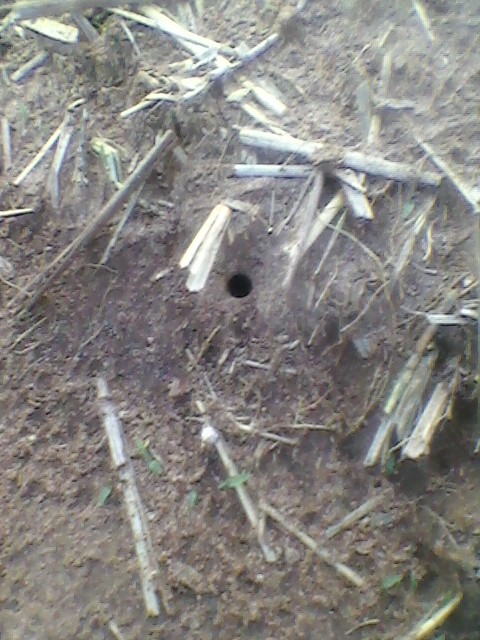
In addition to the (mostly native) edible fruits I have added to the Magic Summer Minifarm homestead, I have also decided to add a few more perennials and shrubs that will support native pollinators. I have added lilacs, mock oranges, witch hazel, mallow, sunchokes, forsythia, Russian sage, perennial sunflower, and a buckeye tree. Ultimately there should be at least three plants that bloom early, three that bloom mid-season, and three that bloom late in the growing season.  I don't think I have quite worked that part out, but I am working toward making my homestead a sanctuary for bees and other pollinators. I have decided not to keep European honeybees this year because I didn't feel completely prepared and I need to do a little more research on honeybee varieties and requirements for keeping them alive through the winter. I am also not completely sure that I want them now after learning more about native bees and how European honeybees can compete with them for nectar and the native bees are often better at pollinating native crops.  I have been learning a lot about native bees lately and how to support and protect them. They are experiencing similar declines to those of the honeybees due to overuse of pesticides and loss of habitat. You can support them by planting more native perennials on your property, allowing your hedgerows to get weedy, keeping brush piles, practicing no-till gardening/farming, leaving a patch of bare ground on your property, and by making mason bee nests (there are many designs-here is just one: http://www.instructables.com/id/Happy-Home-for-our-friends-the-Mason-Bees/). Below are some photos of the ground nesting bee nests in the garden. They look a little like ant hills with slightly larger openings, and the ones I have seen don't typically have piles of sand or dirt outside of the hole.

Yesterday I completed a blueberry patch. I removed the topsoil and vegetation from a circular area, mixed in some peat to bring the acidity up, planted 11 blueberry plants, and mulched the circle with leaf mold and pine needles. A biologist I work with told me that pine needles actually won't increase the acidity of soil, but I'm not entirely convinced that's true. Even if it is, the pine needles and leaves will at least help retain moisture in the soil.

Recently we experienced a serious flood on the reservation, but we were very fortunate not to have been affected by the damaging rains. The worst thing that happened was that some of the manure from my squash hill was washed out and a small puddle formed near the mounded row of cauliflower plants. The mounded rows definitely helped a great deal. This is an agricultural technique employed by the Ojibwe people for hundreds or perhaps thousands of years. It allowed the farmers of yore to grow crops in wetlands and to grow corn as far north as Saskatchewan! Mounded rows heat up faster than flat vegetable beds, and they allow plants to put down deep roots into fluffy soil. They are definitely a great choice for wet areas!

Here are some recent garden pics:
 Here are some gladiolas interplanted with peas. The glads will support the peas as they grow larger.
 In the foreground you can see sunflowers and snapdragons. In the back left you can see the gladiolas again, plus a mounded row of fingerling potatoes and peas and the eastern leg of the arbor below. In the top center is this year's compost pile, most recently topped with scythed grass from the front yard. The white plastic gate serves to mark the place where several ground nesting bee holes exist.
 Here is an arbor that I had intended to support some Concord grapes that have yet to emerge from dormancy. To hedge my bets, I also planted 4 hardy kiwi females and one male (you need at least one female and one male to get fruit, which I have never tasted but I've been told they taste like grapes. Perhaps I'll get to try one this year or next.)
Honeyberry, fish head, and two glads. Honeyberries are a native fruit that are closely related to honeysuckle. They resemble elongated blueberries and are some of the first fruits to emerge in Minnesota. I have planted 5 of them in the garden. The fish head was dug out of the squash hill by some unknown animal. It is a remnant of spearing and netting season--some of my coworkers gave me the offal from their catches and now I have a bunch of dead fish in the backyard. The animals had stopped messing with the fish so I thought it would be safe to put it in the squash hill when I rebuilt it after the accidental tilling. I was wrong. They dug it out within a couple of days, leaving the scraps scattered around the garden. I have quite a few gladiolas this year, and I decided to fill in the garden space with them in the area not (yet) occupied by the young honeyberries.
 Here are the mounded rows that helped to save the garden from the flood. In the foreground are lumina white pumpkins in the squash row. Behind them are jalapeno and Anaheim chile peppers, and behind the peppers are Sungold and Roma tomatoes. Behind that you can see the yard is uncut and full of yarrow. There is also a young apple tree barely visible against the decrepit back portion of the garage.
Here are a few of the ageratum plants I am growing for a seed trial organized by the University of Minnesota. This is part of my volunteer service required to become a master gardener. The grass is starting to become a nuisance. I'll try to get to it soon while it is still an afternoon project...
 Here is another arbor near the entrance (from the house) of the garden. It has three legs, and each is planted with Cascade hops, Willamette hops, and chocolate vine (Akebia quinata). The fuschia is there for any hummingbirds who may be hanging around.

Here is another view of the garden. It doesn't look like much but soon it will be bursting with life and crops!