glorious flowers

glorious flowers
Showing posts with label edible fruits. Show all posts

Thursday, June 6, 2013

Spring arrives just in time for summer


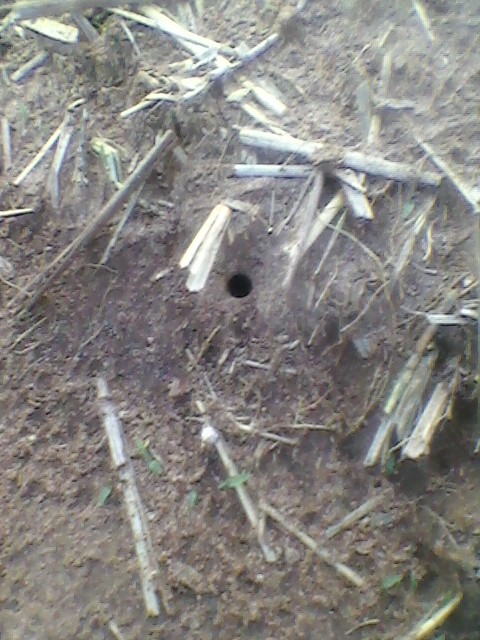
The garden is coming to life despite the persistent cold weather. Peas, fava beans, garlic, turnips, and cover crops have emerged and I'm still holding off on planting my warm season crops. The elderberries, irises, honeyberries, asparagus, catmint, and other perennials are returning, and the honeyberries especially look vibrant. They have flowered already. Ground nesting bee nests abound, probably more this year than in the past two because the garden wasn't tilled this year. Despite that, the weeds haven't been too bad. I think the weather has helped keep the weeds at bay more or less, so I have actually had time to pull them occasionally.


 I put in over 100 new perennial fruits in the backyard behind the garden, including grapes, Juneberries, American wild plum, Aronia/chokeberry, blueberries, a red fleshed apple, a peach, more sand cherries, elderberries, currants, and raspberries. I am looking forward to 2015, by which time all the perennials from this year will be "running." I've heard people say that in the first year a perennial "sits" and doesn't grow much, and the second year it "crawls"  (grows a little). The third year it "runs" (grows a lot). Right now they don't look like much--just a bunch of sticks in the ground. Some have leaves, but no flowers yet. I have potted up the extras for sale. Contact me if you are interested in purchasing some native superfruits. They are $6 each or 2 for $10. I also have purple lilacs, basswood, shrub roses, and hazelnuts. Tulips are available for $5 per dozen.
 The compost failed to change much over the winter, even though I put it in a sunnier spot than 2011's compost and covered it with a black tarp. I think the problem is too many "browns," or too much carbon, and not enough "greens," or nitrogen-rich materials. I will mow the lawn this weekend before I turn the compost and add the grass clippings to it before I apply the biodynamic preparations.

 I am growing some new things this year, like garbanzo beans, fava beans, lentils, cotton, and peanuts. The photo on the right is of a Kabouli black garbanzo bean. I purchased them from both Baker Creek Heirloom Seeds and Irish Eyes Seeds. Perhaps I did something wrong, but so far it seems like the germination rate is a bit low for the Baker Creek Seeds. I have tried to fill in the bare spots in garbanzo beds with seeds from Irish Eyes, so we'll see if the germination is any better for those. I have direct seeded the lentils, but haven't seen them sprouting yet. The favas are coming up. The grasshoppers may be chewing on them a little. They seem to like sheep sorrel, which grows around the garden perimeter and creeps into it every chance it gets. So I am tolerating a dense patch of sheep sorrel in the garden to feed the damn grasshoppers so they don't eat the fava beans or anything else I plant. Depending on how pesky they get this year, I might try eating the grasshoppers this year. Someone suggested it at a work meeting recently.
 Here is one of the honeyberries I planted last year. There are 8 in the garden, and all of them have come back looking so much better than they did last year, and certainly bigger. They seem to have nearly finished flowering, and I'm looking forward to having my first taste of honeyberries once they ripen.
I tasted a few spears of asparagus. I ate them raw less than 5 feet from where they grow. Delicious! It's hard not to eat all of them, but I want the asparagus plants to grow big so I have to restrain myself. I have been checking every day to see how many spears are up and if any plants might be able to spare one or two spears for me. The ones I let go are growing tall. I can't wait for the asparagus to "run." I planted it last spring, and I think it was 2 year old crowns (maybe 1 year old crowns? I have only recently started to keep better records).
I mentioned above that I put a red fleshed apple in the back yard. I just heard about red fleshed apples a couple of months ago. I found them by looking through Southmeadow Fruit Gardens catalog. Southmeadow Fruit Gardens is a company in Michigan with an enormous collection of heritage and commercial varieties of apples. They sell other fruits too, as well as rootstocks. I wanted the apple called Hidden Rose, but they were out so I asked for the red fleshed apple with the reddest flesh they had left, and they sent Almata. It had red flower buds about to burst when it arrived, but unfortunately the uncouth four-legged neighbors ate them all. Now the tree is sprouting beautiful red leaves and the vegetarians in the neighborhood seem to have found other sources of food (though I'm pretty sure they are the ones chomping the strawberry leaves). My uncle in law dropped off some straw bales and fence posts and short rabbit fencing. I will be installing a fence soon to try to keep at least some of the critters out.  The straw bales will cover up the insulation in the front of the house, catch rain from the roof, and grow some cucurbits. So much work to do still! But it is a labor of love.
As for the heirloom bedding plant sale, let's wait until next Friday and Saturday, June 14 and 15. By then the starts will look better and the soil might even be warm enough for planting.
Friday & Saturday, June 14 &15 from 9 to 3. Email me at the contact link above for directions.


Wednesday, June 27, 2012

honeyberry fish head glads

In addition to the (mostly native) edible fruits I have added to the Magic Summer Minifarm homestead, I have also decided to add a few more perennials and shrubs that will support native pollinators. I have added lilacs, mock oranges, witch hazel, mallow, sunchokes, forsythia, Russian sage, perennial sunflower, and a buckeye tree. Ultimately there should be at least three plants that bloom early, three that bloom mid-season, and three that bloom late in the growing season.  I don't think I have quite worked that part out, but I am working toward making my homestead a sanctuary for bees and other pollinators. I have decided not to keep European honeybees this year because I didn't feel completely prepared and I need to do a little more research on honeybee varieties and requirements for keeping them alive through the winter. I am also not completely sure that I want them now after learning more about native bees and how European honeybees can compete with them for nectar and the native bees are often better at pollinating native crops.  I have been learning a lot about native bees lately and how to support and protect them. They are experiencing similar declines to those of the honeybees due to overuse of pesticides and loss of habitat. You can support them by planting more native perennials on your property, allowing your hedgerows to get weedy, keeping brush piles, practicing no-till gardening/farming, leaving a patch of bare ground on your property, and by making mason bee nests (there are many designs-here is just one: http://www.instructables.com/id/Happy-Home-for-our-friends-the-Mason-Bees/). Below are some photos of the ground nesting bee nests in the garden. They look a little like ant hills with slightly larger openings, and the ones I have seen don't typically have piles of sand or dirt outside of the hole.

Yesterday I completed a blueberry patch. I removed the topsoil and vegetation from a circular area, mixed in some peat to bring the acidity up, planted 11 blueberry plants, and mulched the circle with leaf mold and pine needles. A biologist I work with told me that pine needles actually won't increase the acidity of soil, but I'm not entirely convinced that's true. Even if it is, the pine needles and leaves will at least help retain moisture in the soil.

Recently we experienced a serious flood on the reservation, but we were very fortunate not to have been affected by the damaging rains. The worst thing that happened was that some of the manure from my squash hill was washed out and a small puddle formed near the mounded row of cauliflower plants. The mounded rows definitely helped a great deal. This is an agricultural technique employed by the Ojibwe people for hundreds or perhaps thousands of years. It allowed the farmers of yore to grow crops in wetlands and to grow corn as far north as Saskatchewan! Mounded rows heat up faster than flat vegetable beds, and they allow plants to put down deep roots into fluffy soil. They are definitely a great choice for wet areas!

Here are some recent garden pics:
 Here are some gladiolas interplanted with peas. The glads will support the peas as they grow larger.
 In the foreground you can see sunflowers and snapdragons. In the back left you can see the gladiolas again, plus a mounded row of fingerling potatoes and peas and the eastern leg of the arbor below. In the top center is this year's compost pile, most recently topped with scythed grass from the front yard. The white plastic gate serves to mark the place where several ground nesting bee holes exist.
 Here is an arbor that I had intended to support some Concord grapes that have yet to emerge from dormancy. To hedge my bets, I also planted 4 hardy kiwi females and one male (you need at least one female and one male to get fruit, which I have never tasted but I've been told they taste like grapes. Perhaps I'll get to try one this year or next.)
Honeyberry, fish head, and two glads. Honeyberries are a native fruit that are closely related to honeysuckle. They resemble elongated blueberries and are some of the first fruits to emerge in Minnesota. I have planted 5 of them in the garden. The fish head was dug out of the squash hill by some unknown animal. It is a remnant of spearing and netting season--some of my coworkers gave me the offal from their catches and now I have a bunch of dead fish in the backyard. The animals had stopped messing with the fish so I thought it would be safe to put it in the squash hill when I rebuilt it after the accidental tilling. I was wrong. They dug it out within a couple of days, leaving the scraps scattered around the garden. I have quite a few gladiolas this year, and I decided to fill in the garden space with them in the area not (yet) occupied by the young honeyberries.
 Here are the mounded rows that helped to save the garden from the flood. In the foreground are lumina white pumpkins in the squash row. Behind them are jalapeno and Anaheim chile peppers, and behind the peppers are Sungold and Roma tomatoes. Behind that you can see the yard is uncut and full of yarrow. There is also a young apple tree barely visible against the decrepit back portion of the garage.
Here are a few of the ageratum plants I am growing for a seed trial organized by the University of Minnesota. This is part of my volunteer service required to become a master gardener. The grass is starting to become a nuisance. I'll try to get to it soon while it is still an afternoon project...
 Here is another arbor near the entrance (from the house) of the garden. It has three legs, and each is planted with Cascade hops, Willamette hops, and chocolate vine (Akebia quinata). The fuschia is there for any hummingbirds who may be hanging around.

Here is another view of the garden. It doesn't look like much but soon it will be bursting with life and crops!