glorious flowers

glorious flowers

Wednesday, July 25, 2012

how my garden grows

It rained today for the first time in over a week, and like most areas of the United States, northern Minnesota has been rather hot as of late. Still, miraculously, the majority of the plants in my garden show no signs of water stress. I credit this to evening shade and tough love. I have found that most plants adapt to a lack of supplemental water, and that if watered too often, plants will begin to depend on it and wilt if the watering isn't kept up. Our high temperatures have remained in the double digits, so that has certainly helped as well. There were some casualties, though. Some of the peas died, and the rosemary I overwintered from last year and recently replanted in the garden is looking pretty bad, and a couple of the hardy kiwis (including the only male) have lost all their leaves to drought. Perhaps the rain falling now will bring the kiwis back (they seem to be rather tough--the ones I planted at work have survived trampling and neglect) and the rosemary.
I harvested two sunflower seed heads yesterday after working on staving off the invading grass. I saw some bees crawling all over the yellow wood sorrel (Oxalis stricta) flowers so I decided to let them remain in the garden. The peas are finally starting to form. The plants are growing so tall and erect, full of pretty white flowers.
The grasshoppers are abundant again this year. At first they weren't so bad, and the crows were showing up to eat them regularly (hopefully they still are--I just haven't noticed any). Then they started eating stuff I don't want them to eat. They have nibbled my rhubarb and turmeric down to nothing, they have bitten half-moons into many of the gladioli, and they have probably finished off my last remaining chamomile plant by now. Something--I'm not sure what--has eaten two of my rosemary plants entirely. I didn't think anything would eat rosemary.
I sprayed the biodynamic preparation 502  on the garden a couple of weeks ago. 502 is supposed to help plants maximize the energy they absorb from the sun, and it can be used to regenerate leaf damage. I was hoping it would give the watermelon radishes and red Russian kale the boost they need to stay alive after a brutal attack from the grasshoppers. Their frass (droppings) are visibly littered all around what is left of the poor plants. I don't notice much of a difference, but I remain hopeful they will pull through (um, long enough for me to eat them...)

The garden truly does feel magic this summer. I love having so much space and freedom to help facilitate the creation of this beautiful, edible landscape, and I feel energized by it and lucky to be its caretaker.


Wednesday, June 27, 2012

honeyberry fish head glads

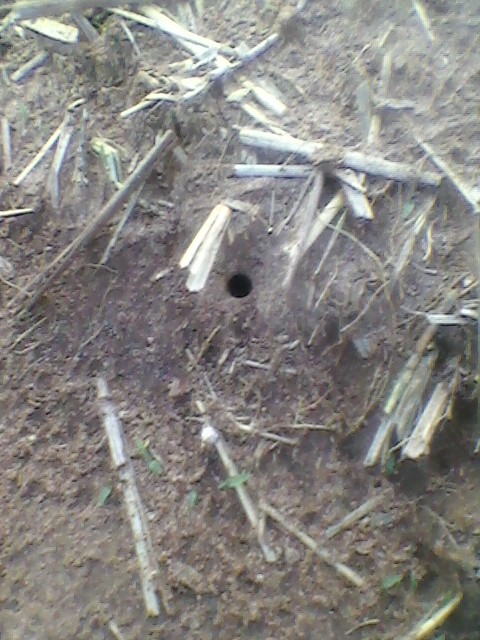
In addition to the (mostly native) edible fruits I have added to the Magic Summer Minifarm homestead, I have also decided to add a few more perennials and shrubs that will support native pollinators. I have added lilacs, mock oranges, witch hazel, mallow, sunchokes, forsythia, Russian sage, perennial sunflower, and a buckeye tree. Ultimately there should be at least three plants that bloom early, three that bloom mid-season, and three that bloom late in the growing season.  I don't think I have quite worked that part out, but I am working toward making my homestead a sanctuary for bees and other pollinators. I have decided not to keep European honeybees this year because I didn't feel completely prepared and I need to do a little more research on honeybee varieties and requirements for keeping them alive through the winter. I am also not completely sure that I want them now after learning more about native bees and how European honeybees can compete with them for nectar and the native bees are often better at pollinating native crops.  I have been learning a lot about native bees lately and how to support and protect them. They are experiencing similar declines to those of the honeybees due to overuse of pesticides and loss of habitat. You can support them by planting more native perennials on your property, allowing your hedgerows to get weedy, keeping brush piles, practicing no-till gardening/farming, leaving a patch of bare ground on your property, and by making mason bee nests (there are many designs-here is just one: http://www.instructables.com/id/Happy-Home-for-our-friends-the-Mason-Bees/). Below are some photos of the ground nesting bee nests in the garden. They look a little like ant hills with slightly larger openings, and the ones I have seen don't typically have piles of sand or dirt outside of the hole.

Yesterday I completed a blueberry patch. I removed the topsoil and vegetation from a circular area, mixed in some peat to bring the acidity up, planted 11 blueberry plants, and mulched the circle with leaf mold and pine needles. A biologist I work with told me that pine needles actually won't increase the acidity of soil, but I'm not entirely convinced that's true. Even if it is, the pine needles and leaves will at least help retain moisture in the soil.

Recently we experienced a serious flood on the reservation, but we were very fortunate not to have been affected by the damaging rains. The worst thing that happened was that some of the manure from my squash hill was washed out and a small puddle formed near the mounded row of cauliflower plants. The mounded rows definitely helped a great deal. This is an agricultural technique employed by the Ojibwe people for hundreds or perhaps thousands of years. It allowed the farmers of yore to grow crops in wetlands and to grow corn as far north as Saskatchewan! Mounded rows heat up faster than flat vegetable beds, and they allow plants to put down deep roots into fluffy soil. They are definitely a great choice for wet areas!

Here are some recent garden pics:
 Here are some gladiolas interplanted with peas. The glads will support the peas as they grow larger.
 In the foreground you can see sunflowers and snapdragons. In the back left you can see the gladiolas again, plus a mounded row of fingerling potatoes and peas and the eastern leg of the arbor below. In the top center is this year's compost pile, most recently topped with scythed grass from the front yard. The white plastic gate serves to mark the place where several ground nesting bee holes exist.
 Here is an arbor that I had intended to support some Concord grapes that have yet to emerge from dormancy. To hedge my bets, I also planted 4 hardy kiwi females and one male (you need at least one female and one male to get fruit, which I have never tasted but I've been told they taste like grapes. Perhaps I'll get to try one this year or next.)
Honeyberry, fish head, and two glads. Honeyberries are a native fruit that are closely related to honeysuckle. They resemble elongated blueberries and are some of the first fruits to emerge in Minnesota. I have planted 5 of them in the garden. The fish head was dug out of the squash hill by some unknown animal. It is a remnant of spearing and netting season--some of my coworkers gave me the offal from their catches and now I have a bunch of dead fish in the backyard. The animals had stopped messing with the fish so I thought it would be safe to put it in the squash hill when I rebuilt it after the accidental tilling. I was wrong. They dug it out within a couple of days, leaving the scraps scattered around the garden. I have quite a few gladiolas this year, and I decided to fill in the garden space with them in the area not (yet) occupied by the young honeyberries.
 Here are the mounded rows that helped to save the garden from the flood. In the foreground are lumina white pumpkins in the squash row. Behind them are jalapeno and Anaheim chile peppers, and behind the peppers are Sungold and Roma tomatoes. Behind that you can see the yard is uncut and full of yarrow. There is also a young apple tree barely visible against the decrepit back portion of the garage.
Here are a few of the ageratum plants I am growing for a seed trial organized by the University of Minnesota. This is part of my volunteer service required to become a master gardener. The grass is starting to become a nuisance. I'll try to get to it soon while it is still an afternoon project...
 Here is another arbor near the entrance (from the house) of the garden. It has three legs, and each is planted with Cascade hops, Willamette hops, and chocolate vine (Akebia quinata). The fuschia is there for any hummingbirds who may be hanging around.

Here is another view of the garden. It doesn't look like much but soon it will be bursting with life and crops!

Thursday, June 21, 2012

updates

This year's garden is shaping up to be quite beautiful and enchanting, and my part in creating it (and the seasonal demands of my day job) has been keeping me from posting to this blog. So I went a little buck wild with the mail order plants and ended up with a yard full of sand cherries, chokeberries, raspberries, blueberries, and Juneberries. I fulfilled my plan to stock up on edible perennials, many of which arrived as bare root plants. The volume of plants that I had to put in the ground was a bit overwhelming, and some of them waited a few weeks for a home. Some of them haven't yet come out of "dormancy" (or is it death?) yet, but the majority seem to be doing well so far.
I experienced a heart-wrenching setback last month when my garden, which was full of garlic, onions, rhubarb, irises, and other perennials, was accidentally tilled. One of the reservation's garden programs tills community members' gardens for free and I had signed up to get a new area tilled, but due to miscommunication last year's garden was tilled instead. Some of the plants survived the tilling, and it's great seeing them pop up now. I'm hoping to harvest some garlic next month, and I bought some replacements for the perennials that didn't come back. The new garden I wanted to be tilled was meant to hold the annuals, and i had planned to fill last year's garden with perennials, but since I only have the one now, I decided to mix the annuals and perennials. I planted peas around the grapes, beans around the honeyberries, and gladiolas between the different varieties of strawberries.
After learning that the most successful Ojibwe farmers of the past, the northernmost farmers of corn, used agricultural methods like corn hills and mounded rows, I decided to implement those methods into my garden. That has already helped save the life of many of the plants in my care, as we just experienced a severe flood in this area. The fact that many of the plants were put in mounded rows kept them out of the water. Of course the sandy soil helps for drainage also. My mom is visiting currently, and she just helped me transplant the last of the garden plants to the garden this afternoon. Now it's time to focus on the weeds....

Thursday, March 22, 2012


Remember that delicious spinach I raved about in an earlier post? Well guess what: it survived the mild (for Minnesota) winter and has begun to grow anew!!!! I found it yesterday as I was picking up the weird trash that pops up in the garden occasionally. (A mechanic used to live on our property before we did, and we often find broken glass and rusted pieces of metal lying around in the soil after a rain. We found two abandoned cars out in the woods behind the garden last year, hopefully there aren't any more under the garden! At least the rusty metal adds iron to the soil.)
A couple of romaine lettuces look like they might be coming back as well, and my chrysanthemums, thyme, silver sage, columbines, and even those extremely hardy snapdragons are all sending up new growth as well. I'm so excited to finally be able to have a place to grow food and flowers on a permanent basis. It feels great to finally be able to put down roots (and to offer a place for the plants I love to put down their roots). This early spring we're experiencing up here in the north woods is getting me so excited about this growing season!
I had the day off yesterday so I ran errands in the morning while it rained and then I did some yard and garden work in the afternoon. I cut down several large branches from a ninebark that was growing too close to the garage. I spent another hour or so afterwards cutting off the smaller stems and twigs from it to burn later (perhaps with a wood gassifier/biochar generator...) and creating long, curved poles that I hope to use to make an arbor at the garden entrance. I will post photos when that happens. Have a great weekend!

Sunday, March 11, 2012

indoor gardens

My indoor gardens are growing so well and the house is starting to burst with life! I have these saffron crocuses that I ordered from Companion Plants in Athens, Ohio that started sending up shoots as soon as I put them in some dirt. They are starting to flop over a bit though, and I'm not sure why this is happening. I think they might be a little too warm, so I put the worst one outside for today to see if it gets any better. The temperature is in the 50s today, so beautiful and sloppy with melting snow. On the left side of the photo you can see the wild ginger that I purchased as a bare root (also from Companion Plants--such a great company with a really impressive catalog).
Along with the crocuses and wild ginger, there is also a blue cohosh plant (large, light-colored pot--this one hasn't started sprouting yet) and goldenseal. I discovered this morning that the goldenseal is actually blooming already! The flower sort of blends into the rim of the blue cohosh pot, but you can see in the picture it is quite unique and pretty. These are the shade-loving plants, so I'm keeping them in a partially shaded south window for now, until the soil is workable and I can transplant them outside. There are several more sun-loving plants in another south window without blinds. Those are forsythia, vetiver grass (which isn't hardy here and will have to live inside for part of the year), wormwood, valerian, and chocolate mint.
I also have oyster mushrooms growing in the kitchen! I ordered these from Fungi Perfecti at the end of February and they are already producing mushrooms! These mushrooms are growing SO FAST. Four days ago, they were not even visible and today the biggest mushrooms in this picture are about 2 inches long! I am so excited to have them around. According to Fungi Perfecti, this oyster mushroom kit will produce 2 flushes of mushrooms, and then after the second flush I can add the mycelia left inside the plastic bag to some wood chips and straw and create an outdoor mushroom bed to help clean up the gas spill in the front yard between the lilac bush and the white cedar (white cedar is what they call Arborvitae [Thuja Occidentalis] here. It is a sacred and protective plant for the Ojibwes). I am so happy with the results of the oyster mushroom kit and so excited to be a mushroom farmer that I ordered some shiitake and reishi mushroom kits from Fungi Perfecti yesterday. These kits are really easy to use and they come with easy to follow instructions. The oyster mushroom kit cost me $25, and I think the other mushroom kits are around the same price. As long as I continue to feed the mycelia new substrate, I can continue to grow mushrooms indefinitely from this kit!

Saturday, February 11, 2012

Mycoremediation

I've been researching mycoremediation lately and I finally started reading a book that a friend recommended a few years ago (Mycelium Running: How Mushrooms Can Save the World), both of which have pointed me in the direction of Paul Stamets. He is the author of the book and a huge proponent of mycoremdiation. When our house was getting set up somehow some gasoline was spilled in the yard. I planted a white cedar in the front yard last fall and the soil smelled really strong of gas. As I filled the hole back in I had to smell each handful of dirt to see if it was contaminated. I didn't really know what to do about it except send the white cedar positive energy, and to spread sawdust around the affected area. As it turns out, oyster mushroom mycelia and straw would have been a better choice. I will be ordering the mycelia from Paul Stamets's website, Fungi Perfecti at www.fungi.com sometime in the near future. Enjoy this Ted talk from Paul. It is fascinating!

Wednesday, February 8, 2012

Great News

My husband gave me the okay for a beehive! He had been nervous to add a beehive to the minifarm because black bears live in the area and he does not want them getting used to coming here for food. Plus it would be horrible if they destroyed a hive. A colleague's beehives were attacked by a bear in the middle of Duluth! In my internet research I learned that electric fences are the best protection, but that nothing is foolproof. Bears are smart and strong. One major key to successful deterrence is having the fence up when the bear first encounters the beehive, so that means acquiring an electric fence before acquiring the bees. I haven't been shopping much for either yet, but I have been looking at top bar bee hives. Top bar bee hives are an improvement upon the typical white boxes that many beekeepers use, and they are a more natural option. They are trough-like in shape and feature a hinged or removable lid. Removable bars are lined up along the width of the top of the trough. Bees will then make their own honeycombs on each bar instead of using the artificial honeycombs attached to the frames of some of the typical white boxes. Creation of wax is actually an elimination process for bees, so it is good for them. They are exuding waste from their bodies. It does also eat up some energy and time, which is why commercial beekeepers use artificial honeycomb to get the maximum amount of honey. I am planning to buy a handmade top bar hive from Kenny at www.kenny61.wordpress.com.
I will purchase a "nuc" (nucleus colony--a queen and a few of her daughters) of Minnesota Hygienic bees. Minnesota Hygienic bees were bred by the University of Minnesota to be "hygienic"--that is, to groom varroa mites off of their larvae. Russian honeybees also exhibit this behavior and can stand the cold temperatures of northern Minnesota.
I accidentally ordered a Forsythia that is only hardy to zone 6. I live in zone 4, so I will need to plant it close to the house and give it a southern exposure. I will mulch it heavily in the fall too, and hope for the best. It is already starting to come to life in my kitchen.